I used to start my workday the same way everyone else does: open laptop, check email, check Slack, check Twitter, remember I was supposed to be working, feel vaguely guilty, open a code editor. By noon I'd done maybe two hours of actual work and couldn't account for the rest.
Then I installed a Minecraft HUD on my Mac and everything got weird.
What Gamification Actually Means
"Gamify your work" is advice that's been handed out for years. Usually it means putting a streak counter in a habit app or earning a badge for completing a course. The problem is that most gamification feels like gamification — a thin reward layer pasted over something you still don't want to do.
Real gamification works differently. The best games give you feedback that is immediate, visible, and meaningful. You don't need to check a dashboard to know if you're doing well. You can see it, in real time, changing as you act.
That's what PixelHUD does to my Mac.
The Setup
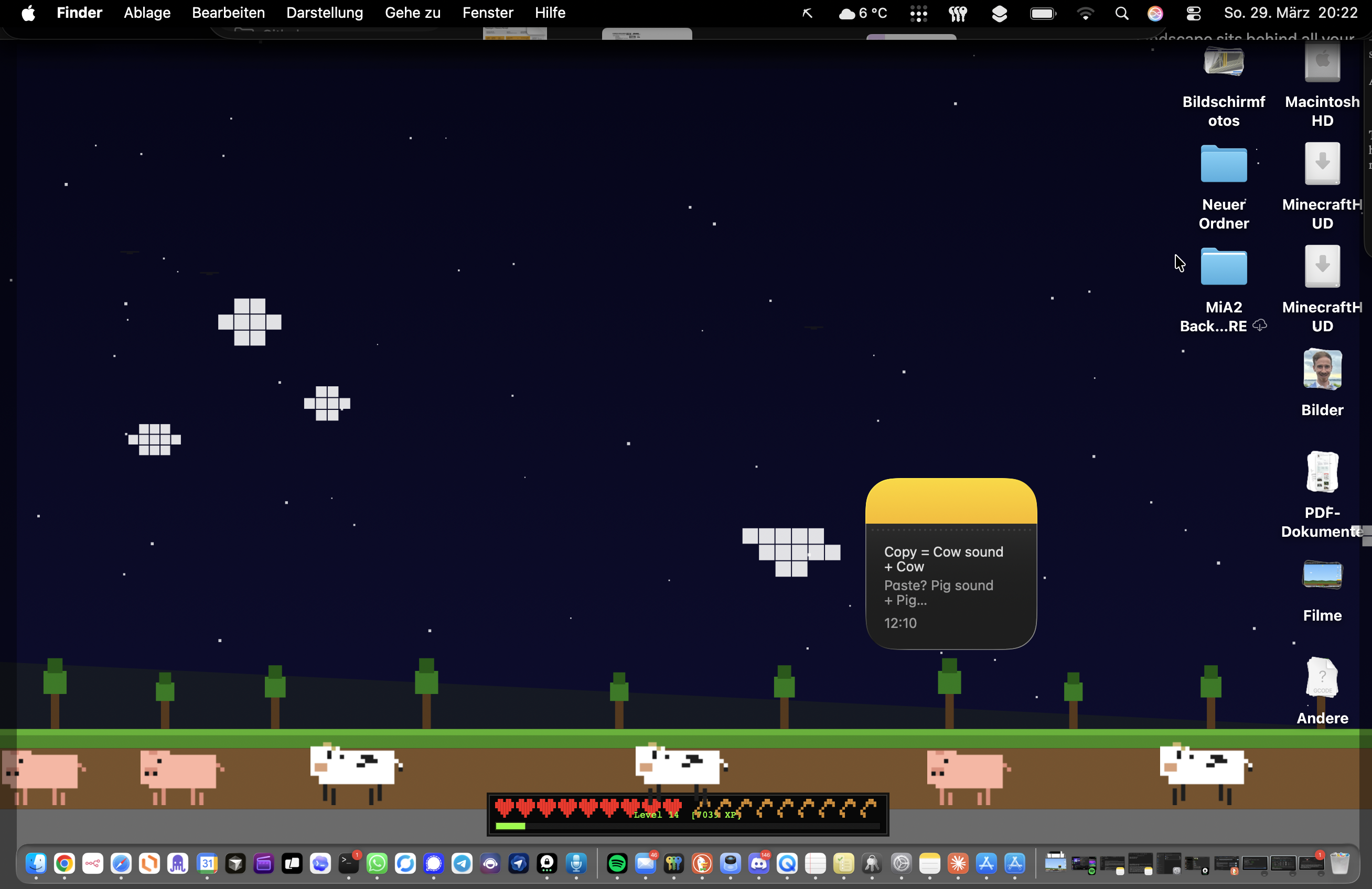
PixelHUD is a Mac app that overlays a live Minecraft-style HUD on top of everything else on your screen. It's always visible, always updating, and completely click-through so it never gets in the way.
Here's what each element tracks:
The hunger bar empties over about six hours — your workday. Keep it full by staying focused. Open YouTube, Instagram, Twitter, Reddit, or TikTok and it drains faster. It's a visible, real-time cost for every distraction you take. I cannot overstate how effective this is. Something about watching a pixelated drumstick disappear because I opened Twitter made me close it in five seconds instead of twenty minutes.
The XP bar fills with every keystroke and click. It levels up, plays a sound, and resets at midnight. At the end of the day, you have a number — your daily high score. It sounds trivial. In practice, watching the bar fill makes you want to keep filling it. The work itself becomes the reward loop.
The health bar tracks your battery. Nine hearts = full charge. Drop below 20% and you hear the Minecraft hurt sound. It's a great reminder to plug in, and it makes something mundane — battery anxiety — slightly funny.
What Happened After a Week
I expected to get bored of it in two days. I did not.
By day three, I noticed I was checking Twitter less. Not because I was trying harder — but because my hunger bar was sitting at 60% and I didn't want to watch it drain for no reason. The cost was visible. The choice to open social media felt like a real tradeoff rather than a reflex.
By day five, I started caring about my XP score. I'd glance at the bar in the afternoon and realize I'd been in so many meetings that I'd barely typed anything. That's information I wouldn't have had before, delivered with zero effort on my part.
By the end of the week, the sounds had become part of my mental state. Cmd+S plays an XP orb sound. Saving my work feels like collecting something. It's a tiny thing but it creates a tiny moment of satisfaction dozens of times a day that wasn't there before.
The Science, Briefly
Gamification works when it creates a tight feedback loop between action and reward. Most productivity systems fail because the feedback is delayed — you see results in a weekly review, not in the moment you make a decision. PixelHUD moves the feedback loop to zero: the hunger bar changes the instant you open a distracting site. The XP bar fills the instant you type.
Research on behavioral change consistently shows that immediate feedback is far more effective at shaping behavior than delayed rewards. The HUD doesn't add complexity to your day — it just makes the invisible visible.
✨ FREE TO TRY — 7-DAY TRIAL
⬇ Download PixelHUD — FreeNative Mac app · Then $4.99 once · No subscription
Download PixelHUD free — available for macOS. Not affiliated with Mojang or Microsoft.